-
Cement Plastering
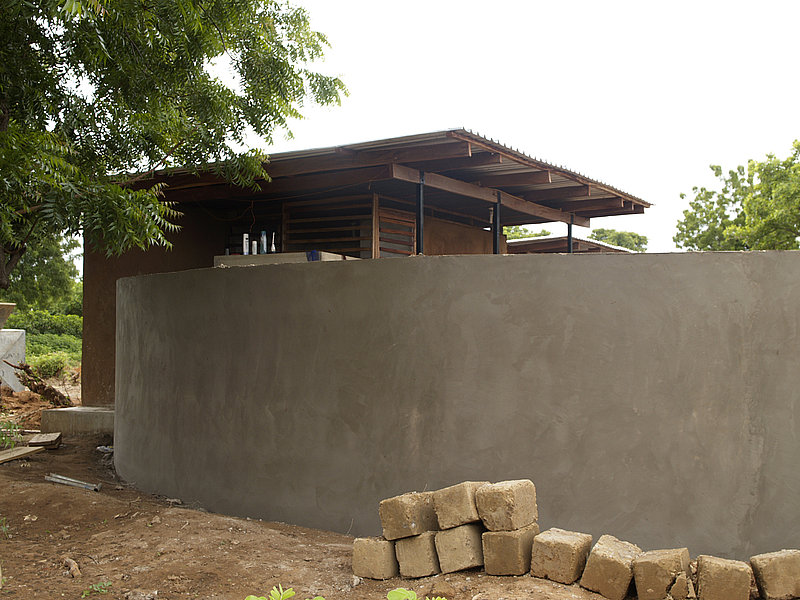
 Cement Plastering is an ideal coating for external renderings. It is specially suited for damp conditions such as bathrooms, reservoirs, water tanks, floors, copings, etc. where non-absorbent surfaces are desired. Cement plaster is usually applied in a single coat. But in certain cases when thickness of plaster is more than 15 mm or it is desired to have finer finish, plaster is applied in two coats.
The process of cement plastering in two coats is described below:
(i) First Coat or Rough Coat:
Usually the average thickness of the first coat of plaster is 12 mm on brick masonry or ashlar masonry and 23 mm on rubble masonry. In case of concrete masonry this thickness varies from 9 to 15 mm depending upon the nature of work. For the first coat cement plaster with mix-proportions as 1 : 3 or 4 (1 cement : 3 or 4 sand) is generally used.
The first coat of plaster is placed between the spaces or bays formed by the screeds on the wall surface. This plaster is applied with mason’s trowels. The surface is then leveled by means of flat wooden floats and wooden straight edges, and finally finished by polishing with a trowel.
If a second coat or fine coat is to be applied, the surface of the first coat is not polished, but roughened with a scratching tool to form a key to the second coat of plaster.
(ii) Second Coat or Fine Coat:
Before applying the second coat, the first coat is left to set but not to dry and is roughened to form proper key with the second coat. The second coat, consisting of pure portland cement mixed with sufficient quantity of water, is applied after about 6 hours. This second coat is laid in a thin layer of 3 mm maximum thickness over the rough and moist surface of the first coat. Finally, this coat is well trowled and rubbed smooth.
Find More About,
Plastering
Types of Plasters
Objectives of Plastering
Terms used in Plastering
Tools Used for Plastering
Lime Plastering
Stucco Plastering
Mud Plastering
Subscribe to:
Post Comments (Atom)


