-
Properties or Characteristics of Timber
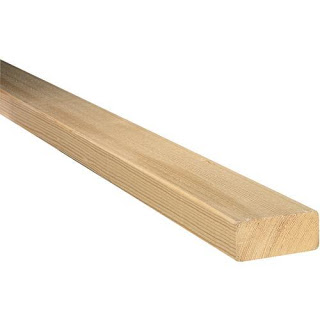 Properties or Characteristics of a Good timber:
(i) Strength:
The timber should be strong enough to withstand the loads whether being applied slowly or suddenly. It should possess enough strength in direct compression and transverse direction.
(ii) Durability:
A good timber should be capable of resisting the various actions due to fungj, insects, chemicals, physical and mechanical agencies. On the basis of durability, the timbers are classified into three classes:
(a) Class I – Timbers having average life of 120 months and over,
(b) Class II – Timbers having average life of 60 to 119 months, and’
(c) Class III - Timbers having average life of 59 months and below.
N.B. These grades of durability have been mentioned for various Indian timbers.
(iii) Weather resistance.:
A good timber should possess adequate resistance against weathering effects such as alternate drying and wetting, alternate heating and cooling because of temperaturw variations, wind effects, etc.
(iv) Fire resistance:
The timber should offer sufficient resistance against fire so that it does not easily ignite. It helps in fire protection of buildings.
(v) Elasticity:
The timber should be capable of regaining its original shape when load causing deformation is removed. The property is important when timber is to be used for bows, carriage shafts, sport goods, wooden beams, wooden floors, etc.
(vi) Workability:
The timber should be easily workable and should not clog the teeth of saw. It should also be capable of being easily planed or made smooth.
(vii) Toughness and Abrasion:
A good timber should be capable of offering resistance to shocks due to mechanical wear.
(viii) Other properties of a good timber are:
(a) Timber should have sufficient weight. A timber with heavy weight is considered to be sound and strong.
(b) The structure of timber should be uniform, hard and compact.
(c) A timber should have sufficient hardness, i.e., resistance against penetration.
(d) A timber should have favourable physical characteristics such as a dark colour (sign of strength); straight fibres; shining appearance; free from defects; sweet smell; good sound when struck, etc.
Find More About,
Timber
Structure of a Timber Tree
Properties or Characteristics of Timber
Defects of Timber
Diseases of Timber - Dry and Wet Rot
Decay of Timber
Seasoning of Timber
Methods of Seasoning of Timber
Preservation of Timber

Subscribe to:
Post Comments (Atom)


