-
Timber
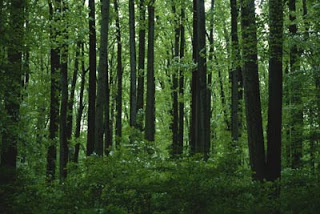 Timber, being a natural product available in abundance in India, is used for the construction of doors, windows, roofs, partitions, beams, posts, cupboards, shelves, etc. The strength characteristics of various types of timbers, generally used in India for engineering works.
Generally, the trees from which timber is obtained are classified in two groups:
(i) Exogenous or outward growing trees,
(ii) Endogenous or inward growing trees.
The former is the class of trees which includes all the commercial timbers used for building purposes, and the latter class includes the trees, such as palms and bamboos, not suitable for engineering use and are found in the tropics. The exogenous trees are further divided into two main groups: Hard woods and soft woods. One should not misunderstand this nomenclature used in classification (i.e., hard wood is not necessarily possessing more strength ) because it is purely a botanical classification. It has been found that many hard woods are softer than certain soft woods.
Hard woods have broad leaves, dark colour, are generally dense and have narrow and well defined annular rings. They are heavy, strong and hard. Hardwoods are capable of resisting all stresses equally well.
Softwoods have long and narrow pointed leaves and are characterized by distinct annular rings ; have straight grains, more uniform texture and light colour. Soft woods are very strong for direct pull weak in resisting thrust or shear.
Find More About,
Timber
Structure of a Timber Tree
Properties or Characteristics of Timber
Defects of Timber
Diseases of Timber - Dry and Wet Rot
Decay of Timber
Seasoning of Timber
Methods of Seasoning of Timber
Preservation of Timber
Subscribe to:
Post Comments (Atom)


