-
Wood Glues and Adhesives
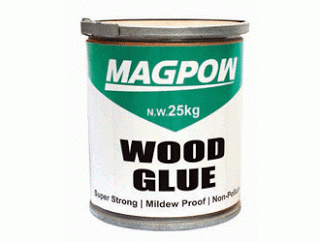 Different variety of glues/adhesives are now available for use with wood, depending on the application. The older adhesives include animal glue, casein glue, and a different types of vegetable glues, of which soybean is most popular even today. Animal glues provide strong, and tough joints, which however, are not . Casein mixed with cold water, when properly formulated, provides highly moisture resistant glue joints, although they cannot be called waterproof. The vegetable glues have good dry strength but are not moisture resistant.
The common high strength glues that are available today are synthetic resins, of which phenol formaldehyde, urea formaldehyde, resorcinol formaldehyde, melamine formaldehyde, and epoxy are the most common one. Phenol, resorcinol, and melamine provide glue joints that are completely waterproof and will not separate when properly made even on boiling. Urea formaldehyde provides a glue joint of high moisture resistance, although it is not good as the other three. Phenol and melamine require application of heat, as well as pressure, to cure the adhesive. Urea and resorcinol, however, can be formulated to be mixed with water at ordinary temperatures and hardened without application of heat above room temperature. Waterproof plywood is commonly made in hot-plate presses with phenolic or melamine adhesive.
Resorcinol is used where heat cannot be applied, as in a variety of assembly operations and the manufacture of laminated parts like ships’ keels, which must have the maximum in waterproof qualities. Epoxide resins provide strong joints.
Adhesives containing an elastomeric material, such as natural or synthetic rubber, may be classified as contact or mastic. The former, applied to both mating surfaces and allowed to partly dry, permit adhesion on contact. Mastics are highly viscous and applied with a trowel or putty knife. They may be used to fix wooden flooring. An emulsion of polyvinyl acetate serves as a general purpose adhesive, for general operations where maximum strength and heat or moisture resistance are not required. This emulsion is merely applied to the surfaces to be bonded, after which they are pressed together and the adhesive is allowed to harden.
Subscribe to:
Post Comments (Atom)


